Immersive Art
Immersive Art
Immersive art surrounds audiences within an experience, using space, sound, light, projection, and other media to create a sense of presence and engagement. Artists create immersive experiences by shaping how audiences move through, perceive, and interact with an environment. Technology, physical space, and sensory elements can work together to change how an artwork is encountered.
Explore how artists create immersive environments and use different media to shape audience experiences.
What makes an artwork immersive?
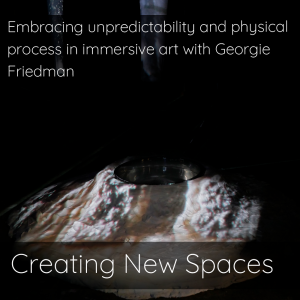
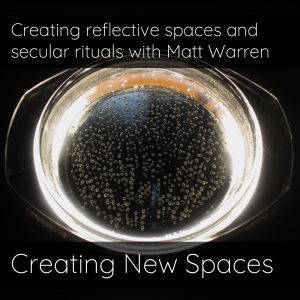
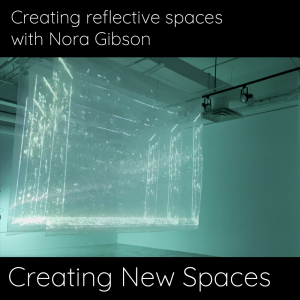
An artwork becomes immersive when it surrounds or deeply engages the audience, making their presence within the work an important part of the experience. Across Creating New Spaces, artists create immersion through combinations of image, sound, light, materials and spatial design. Georgie Friedman works with large-scale moving imagery and physical processes, while Matt Warren creates reflective environments through sound and installation. Rather than being something audiences simply observe, immersive art can create an environment they enter, move through, and experience over time.
How do artists create immersive experiences?
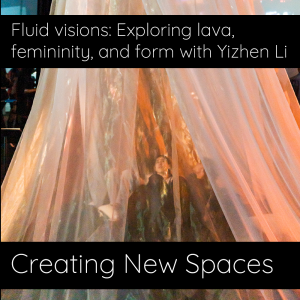
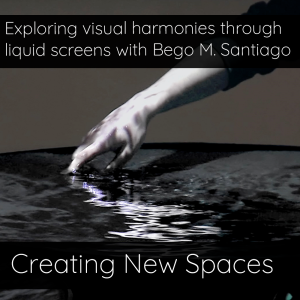
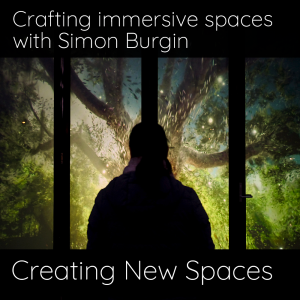
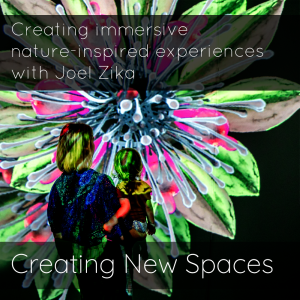
Artists create immersive experiences by considering how different elements of an installation work together within a space. Simon Burgin explores the process of crafting immersive spaces, while Joel Zika creates experiences influenced by natural environments. Bego M. Santiago experiments with projected imagery and liquid screens, and Yizhen Li combines moving images, materials and spatial installation. These approaches show how artists can shape an audience’s attention and perception through scale, movement, sensory elements and the physical arrangement of an artwork.
How can sound, projection, interaction, and space create immersion?