Collaboration
Collaboration
Collaboration plays an important role in media art, bringing together artists, scientists, technologists, designers and communities to create work that draws on different skills and perspectives. These podcast episodes explore how artists develop shared creative practices, work across disciplines and navigate the practical and creative challenges of making art together. From long-term artistic partnerships to collaborations between art and science, they reveal how ideas, responsibilities and ways of working evolve through the collaborative process.
Explore how collaboration can shape the creative process, expand what is possible and influence the final artwork.
How do artists collaborate to create artworks?
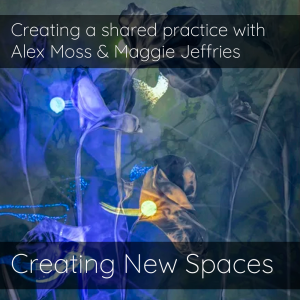
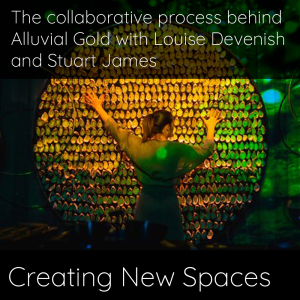
Artists collaborate by bringing different skills, materials and ways of thinking into a shared creative process. Across Creating New Spaces, collaboration often develops through experimentation, conversation and prototyping rather than simply dividing up tasks. Alex Moss and Maggie Jeffries describe developing a ‘third shared practice’ between painting and digital media, while Vicky Browne and Simon Reece and Louise Devenish and Stuart James show how collaborators can shape a work together from its earliest stages. The resulting artwork becomes something that neither artist would have created independently.
How can collaboration change the creative process and the final artwork?
Collaboration can change both how an artwork develops and what it ultimately becomes. Instead of following one artist’s predetermined idea, collaborators respond to each other through testing, feedback, and iteration. In Lacunae, collaboration and experimentation led to a more refined work that used less technology, while Alluvial Gold evolved through an integrated exchange of sound, performance, and visual material. Schwister similarly developed through repeated prototyping and observation. Across these conversations, collaboration creates space for unexpected ideas, new working methods, and outcomes that emerge through the process itself.
How do artists collaborate across art, science and technology?
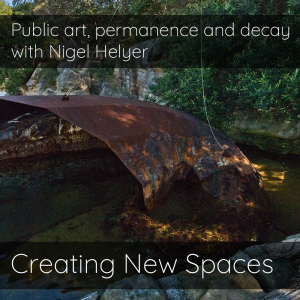
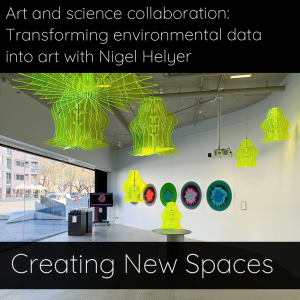
Collaboration across art, science, and technology often involves translating knowledge or data from one field into another. Nigel Helyer works with scientists to turn environmental research and data into sensory artistic experiences, while Theresa Schubert combines climate research with sound, projection, glass, water, and generative technologies. Other artists use sensors, digital systems, and environmental information as creative materials. These collaborations allow scientific research and emerging technologies to become part of the artistic process rather than simply tools used to produce an artwork.