Public Art
Public Art
Public art is created for shared spaces, connecting artworks with the places, communities and people who encounter them. Artists working in public spaces consider location, audience interaction, materials, technology and the lifespan of an artwork. Public art can respond to local histories and communities while changing how people experience familiar environments.
Explore how artists create, install and maintain public artworks and design experiences for public spaces.
How do artists create work for public spaces?
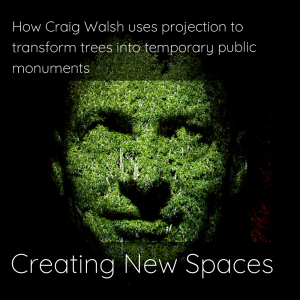
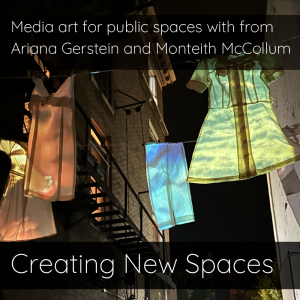
Artists create work for public spaces by responding to the physical site, the people who use it, and the social or cultural context of the location. Across Creating New Spaces, Craig Walsh uses projected portraits on trees to create temporary monuments shaped by local communities, while Ariana Gerstein and Monteith McCollum explore how media art can operate within public environments. Creating public art involves balancing artistic ideas with practical considerations such as location, technology, materials, accessibility, and how audiences encounter the work.
How can public art encourage audience interaction and participation?
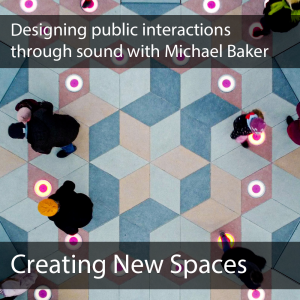
Public art can encourage participation by creating opportunities for people to interact with an artwork, with each other, or with the place around them. Michael Baker explores how sound-based installations can encourage playful social interactions in public spaces, while Craig Walsh’s Monuments involves communities in deciding who should be represented. These approaches show that participation can take different forms, from physically interacting with an artwork to contributing stories, perspectives, or local knowledge that influence its development and meaning.
How are public artworks designed, maintained and adapted over time?